Author Archives: Paul Roberts

Unknown's avatar

About Paul Roberts

Born in New Plymouth, New Zealand. I now live in Orewa, New Zealand

Economic Trade in Ngāmotu, mid 19th Century

Initial contact of course commenced with the establishment in 1828 of Dicky Barrett and Jackie Love’s trading station at Ngāmotu. Right from the start the relationship between the Europeans and tangata whenua was regarded as being mutually beneficial. Leanne Bouton put it this way:

In exchange for their skills as traders and whalers, they [the Europeans] had been given use rights to portions of tribal land and resources and provided with wifes. They were also expected to follow iwi customs and to defend the community.

Boulton 2004: 54

When Barrett and Love settled at Ngāmotu. ‘… they had a raupo potaka [storehouse] buillt 100 feet long with calico-covered doorways and compartments on each side like horse stalls, and a succession of fire holes for their European employees’ (Bently, 2007:149).

Taranaki iwi were not alone in pursuing trading relationships with Europeans. The first shore-based whaling station in New Zealand was estalished in 1827 at Preservation Inlet, Forveaux Strait. Within a few years there were 12 between Preservation Inlet and Banks Peninsula, hunting black and right whales as they migrated along the coast (ibid:207). Other successful traders in the 1830’s were located at Hokianga, Poverty Bay and the Waikato.

During the 1830s hapū of Te Ātiawa had formed a successful economic partnership with Dicky Barrett and his crew, importing and exporting a range of western goods.

Right from early on in the development of New Plymouth settlement, Ngāmotu hapū utilised their land to grow produce, selling and exporting that produce as well as exchanging goods with other hapū and iwi, thereby participating in the emergent capitalist economy of the settlers while maintaining their mana in the traditional Māori world.

By 1853 then hapū economy had received over 2800 pounds in trading revenue and were expecting to earn about 5,000 pounds in 1854. That was all the more impressive given that the Government has acquired all of the land between Paritutu and Bell Block, leaving the hapū only with native reserve land to live on (Bolton, p112-113).

In 1855, John Morgan imported a four-horse wheat threshing machine which he sold to local hapū/iwi from Huirangi – an indication of how willing Te Āti Awa were to obtain machinery to assist and advance their agricultural pursuits. John also noted that Te Āti Awa collectively managed to establish a thriving economy based primarily on selling food to the settlers in New Plymouth. It appears that John was relatively well known among local Te Āti Awa circles.

Andrew Morgan, April 2024

Whaling at Moturoa: Scene of Olden Days

The following is an article published in the Taranaki Daily News, 26 November 1932. It is a highly moving account not only of the danger in whaling and the courage and skills of those who took part, but also of the esteem that so many held of Dicky and Rāwhinia Barrett. It is also an explicit account of the brutality of whaling, an activity that is thankfully well in the past.

“There she blows!” was a cry which sent a thrill through the Moturoa whaling station in the old days. It was a call to action, and the boats were soon afloat pulling out to the spot where a whale had been seen. It was not uncommon to see two boats strike off in a direction quite different from the one following the main line of the chase. The leader of these two has seen some indication, or thinks he has, in the direction of the whale’s tail when she last “fluked” or some change in the wake she left behind her, which, to his experience, bespeaks a possible change of direction. He therefore tries to cut off the whale by crossing the line of her supposed new run. Again the whale appears, though too far away for anything but observation of its movements by the hunters. Even by the watchers ashore some of the excitement of the chase is felt, the leading boat is well ahead and there is the feeling that the whale may rise ahead of it at any moment. A long wait and again, not far ahead, the whale blew aloft a cloud of smoke like water. She flukes her enormous tail 30ft. into the air and casts her great body playfully out of the water. Quietly but speedily the boats draw nearer, and once again the huge black mass leaps out of the water, throws up its tail and plunges again head first into the sea. To the whaler, wise in his work, some indication of the “course” the whale is taking is apparent, and Dicky Barrett manoeuvres his boat to the place where he expects the whale to appear next. Suddenly the whale rises, a few yards in front of the boat, and the harpoon flies true and straight into the black mass. This is called “making fast.” The harpoon line whistles over the pulley wheel, and the boat positively flies through the water.

Now comes the skill of the whaler in steering the boat at frightful speed and in watching every movement of the frightened, tortured whale. It rapidly takes the line and the 200 fathoms in the boat are nearly exhausted by the whale’s determination to try the depth of the water, technically called sounding. Gradually the rush of the line slows down, the slack is taken up slowly and carefully and the boat’s crew wait for the next move in the game of skill against strength. Soon the whale rises to take breath again and another harpoon finds its mark. The whale gradually becomes exhausted, runs less rapidly, and rises more frequently. Slowly it rolls one fin out of the water, and, like a flash, another harpoon flies a good foot into the spot below which the “life” is said to be. Only superb seamanship saves the boat from annihilation as the whale swings around its huge tail out of the water and brings it down with a tremendous report. The whale wriggles and plunges, twists more furiously than ever. It now spouts thick blood, and the men in the boats know it is theirs.

That, put briefly, was a scene well-known in Taranaki waters 90 years ago. The risks were tremendous, yet to Dicky Barrett and his mates they were all part of the day’s work and the reward was worth the risk.

There came day, records Mr J. T. Wicksteed, when Dicky Barrett was killing a whale that had run unusually close in. Three boats from Richard Brown’s station, which had joined in the chase, hung about within a short distance. Barrett had four boats out, and he headed the seven-oared craft himself. As a rule these sights were watched from the high ground where the flagstaff stood (now cleared away from the railway station site), but on this occasion, the tide being out, and the whale being so close in, a group of excited merchants and idlers stood close to the sea watching through one or two telescopes. The men in the boats and all their actions were plainly visible. The whale was spouting blood in a vortex of spume when Dicky Barrett ran in to put a finishing lance into its “life”. Suddenly the cry went up, “There she flukes! By jove! she’s done for Barrett!”. The great tail had appeared to fall upon the boat, which, for the moment, was lost to view in the churning cauldron worked up by the dying whale. Soon, however, the boat was again visible, but there seemed to be no one in her. A little later, first one, and then another figure arose, till all where there except for the brave-hearted headsman. It was soon evident that the boat was a mere wreck and she cast off the now useless line which was fast to her harpoon and began to paddle to the shore like a wounded bird. Two or three of her men sat on the gunwhale, on one side, so as to throw the shattered side as high out of the water as possible, and so, on her side rather than on her keel, she approached the shore slowly.

Still no Dicky Barrett was seen. The boat ran into a little cove sheltered, in those days, by two reefs of rocks. This little harbour was called “Candish’s Bay”, and lay about 200 yards nearer the Sugar Loaves than the regular landing place. When the stove-in, crippled boat at length was paddled to the beach poor Dicky Barrett was lifted from her bottom, insensible, and carried ashore.. He lay on the warm sands above hight water mark for some little time, and then he was carried and half walked between two strong supporters to Richard Brown’s, which was the nearest house. They were rivals in the whaling business, but Mr Brown would, as all present knew, do everything within man’s power for his friend.

The men in the boat told the story of the mishap and declared that the whale had not touched the boat and all the mischief had been effected by the concussion of the air as that terrible tail fell. It seems probable, however, that the tail struck the oars and wrecked the gunwhale and the planking. A man was bailing hard all the way in to keep the boat afloat.

Possibly Barrett’s health had not been good before he went out, or even such a shock could hardly have shaken his iron nerves so badly. He never headed his boat again, and seemed never quite well. He aged rapidly in appearance, and died a year or two later. So ended the stout, kind, honest-hearted old whaler, regretted by all who knew him.

His passing broke a link between the New Zealand of the Maori and its settlement by white man. Barrett would probably have laughed if anyone had told him he was an Empire-builder. Nevertheless, it has been the pluck and endurance of such as Dicky Barrett that have extended the British mana over countless leagues of land and sea.

Dicky Barrett’s body was interred in the Maori cemetery at Ngamotu. Some years ago the little cemetery , which is near the Bayly Road, almost on the beach, was cleared and an old headstone to Barrett uncovered. His wife, who whatever her rank, was a Maori of influence and character, is buried alongside.

paperspast.natlib.govt.nz

Rātāpihipihi

Updated 18 April, 2025

Rātāpihipihi Scenic Reserve is situated south west of and close to Rotokere / Barrett Lagoon.

Entrance to Rātāpihipihi Scenic Reserve

Rātāpihipihi track

A short video of Rātāpihipihi is available here.

The origin of the name ‘Rātāpihipihi’ may refer to a local hunting method … young Māori would hide up in one of the many rata trees in the area and blow through a leaf to make a ‘pihipihi’ sound to attract the birds so they could tap them with a club or a short stick. An alternative is that the name refers both to the predominance of rata trees and the presence of the silvereye bird (Tauhou) also known as ‘pihipihi’.

The broader Rātāpihipihi rohe (area) is of shared cultural, historical and spiritual significance to the Taranaki Iwi and Te Ātiawa, being an area widely occupied by Taranaki Iwi and parts of Te Ātiawa. The rohe is inclusive of several sites of significance: Rātāpihipihi kāinga, Te Rangihinga, Ongaruru, Rotokere/Barrett Domain, Kororako pā and Kaikākāriki, all areas that had been widely occupied by Taranaki and Te Ātiawa (Taranaki Iwi Deed of Settlement: Documents). A part of Rotokere (including Kororako pā) was gifted to Dicky Barrett by his father-in-law, Eruera Te Puke Ki Mahurangi, when he married Wakaiwa Rāwinia in 1828. Post colonisation the land became known as Barrett’s Reserves D and C.

The Rātāpihipihi Māori (Native) Reserve (371 acres) was established when the Omata block was purchased from Māori by the colonial government in 1847. Following designation of the reserve, many people from the Potikitaua and Ngāti Tairi hapū of Taranaki relocated from the home kainga at Omata to Rātāpihipihi. Over the following years Rātāpihipihi became a prominant kainga (Taranaki Deed of Settlement: Documents).

At the start of the Taranaki Land Wars early in 1860 Taranaki, Ngati Ruanui and Ngati Rauru iwi came to the assistance of Wiremu Kingi (Te Ātiawa) with the Rātāpihipihi kainga playing host. On the 4 September 1860 a military, naval and militia force from New Plymouth attacked the Kainga. The pā and surrounding cultivations were levelled and razed by fire (The New Zealand Wars: A History of the Maori Campaigns and the Pioneering Period: Volume 1 (1845-64) Chapter 19: The Battle of Waireka).

Subsequent actions under the Maori Land Court and Native Land Court divided the native resources into Crown Grants where seperate land titles were allocated to individuals and/or leased. In June 1872, 140 acres of the Native Reserve No. 5, Rātāpihipihi was allocated to four people from the Taranaki Iwi. In 1906 50 acres of that grant was taken under the Public Works Act 1905 and Scenary Preservation Act 1903 for scenic purposes.

The Barrett/Honeyfield interests historically and over time are unclear. However, we do know that Ratapihipihi A East Block was allocated to Rāwinia Barrett (Taranaki Land Court Minute No.7 p 205). However, according to the Maori Land Court (ref 27/1317) the original owners of Rātāpihipihi A East were Renata Kauereia with 1,000 shares and Harata Waikauri with 4,000 shares. In June 1887, under the West Coast Settlement Act 1880, the Native Land Court leased 38 acres of Rātāpihipihi A East until 1971 when it was transferred to James Storey Barrett, farmer of New Plymouth (Janine Ford).

Hoere Parepare (Rāwinia’s nephew) gave his interest in Rātāpihipihi Reserve No. 5 to his wife, Miri Hoera, then to his adopted son Eruera Kipa.

Rātāpihipihi is now administered by the Department of Conservation. Rotokere/Barrett’s Domain was taken under the Reserves and other Land Sale, Disposal, and Enabling and Public Bodies Empowering Act 1901 (Section 19, Schedule 3) and is now administered by the New Plymouth District Council.

John Morgan 1829-1916

Background

John and his brother William Morgan emigrated from North Dorset to Taranaki in January, 1850, with their first cousins, (Harriet) Matilda and William Honeyfield.

I was contacted by my fifth cousin Andrew Morgan in March 2022 offering a sample of John Morgan’s diary for this website. Andrew and I share the same great-great-great-great grandparent, Hannah Morgan. Andrew and I had not known each other: it was only after Andrew recognised the Honeyfield name in this website while doing some Morgan ancestry research that he got in touch with me. I was so pleased to hear from Andrew! Incredibly, Andrew then revealed that he knew my first cousin from the other side of my family, Brian Roberts, very well. Small world!

I had already been given some of John’s recollections for inclusion in the posting on the Honeyfield siblings emigration from North Dorset. However, on receipt of Andrew’s material, I decided to more fully record selected extracts from John’s diary notes here because John’s record of his life is so interesting.

John’s notes date from his early days as a school child in the 1830’s in a small rural village in North Dorset, through to his initial working years as a tenant farmer/farm worker. The circumstances in which the Morgan & Honeyfield cousins decided to emigrate to New Plymouth and their first experiences in Taranaki, including establishing the farm at Tataraimaka are described in fascinating detail.

The Morgan brothers were leaders and pioneers. It was John Morgan who made the decision to emigrate to the new colony of New Zealand. His brother William and his Honeyfield cousins Matilda and William, being in similar circumstances with limited choices for jobs and career advancement, decided to join him. Not having travelled far before – even to Salisbury some 45 miles from Gillingham – the prospect of travelling to the other side of the world must have been a mind-boggling situation for them. It was John and William Morgan who were the first to purchase land at Tataraimaka and establish a farm. As will be noted below, John went on the become a leading politician in the colonial Government.

The notes as represented here as recorded by John’s great-grandson in the first decade of the 20th century.

My observations as editor are in square brackets.

Extracts from John Morgan’s diary

Source: John Morgan 1829-1916: a history of his life and times, taken from his notes and recorded by the great grandson of his brother William Morgan:- Robert R Morgan in 2002

Dorsetshire

I was born on a farm in Dorsetshire called Gutch-pool in the parishes of Gillingham and Motcombe, situated in the extreme north of the County bordering on Wiltshire. In fact the boundary of the farm is the boundary between the Counties. My Father, who was a well to do farmer, had another farm adjacent, called Longmoor, in the parish of Gillingham [Ed. Tenant farmers paid a fixed rent for the land. They often owned their own stock and kept the profits from their agricultural and horticultural farming, except for a 1/10 tithe on gross value of the farms annual produce paid to the Church or tithe owner]. Both these farms belonged to the Crown, and were under the Commission of Her Majesty’s “Woods and Forest”, supervised by a Steward – of which I have to speak more further on.

When I was about three years old, we shifted from Gutch-pool to Longmoor, and here I spent the early days of my childhood, much in the same way in which County children are brought up, suffice to say, that previous to my attaining the age of 7 years I had gone to a Dame School [Ed. Dame schools were often run by women with little or no qualification who charged a small fee for teaching reading, writing and other skills … often serving as a child-care service than a school] where I had learned my alphabet and to sew. Shortly before reaching my 7th year, I was placed at a school in Gillingham – under Daniel Cave, where I boarded, going home on about an average of once a quarter [Ed: amazing that John only went home once a quarter even thought the distance from home to school was not that great]. At this school I remained for six years – but I find I made little progress in my learning – being always regarded as a dull scholar – in those years.

During these school days, I well remember hearing the church bell toll, at the death of King William the IV [Ed.1837]. Also the merry peels that rang at the accession of Queen Victoria to the throne. I also have a very distinct recollection, of being in the procession of children that marched through the village, with a rosette of blue and white ribbon on my breast, preceded by the band, celebrating her late Majesty’s Coronation. These and subsequent events are impressed on my memory. There was the children’s Fete with the attendant ringing of bells, and village merrymaking, at Her Late Majesty’s Marriage. It was also during my school days, that the century of Wesleyanism was celebrated, in this I also participated. I also remember the introduction of gas into our village, the gas works being in the vicinity of our school; this was in the years 1837-8 …

[Ed. John finished his education by attending a day school in Mere in the years 1842/43 after which, from the age of 14, he worked on the family farm]

I had to attend to a flock of 300 ewes. At this I was engaged until I left England in 1849. Not withstanding my engagement with sheep, I had to do much other work, such as milking in the mornings, and at every opportunity, when the sheep did not require my constant attention – that is, if they were in an enclosed field, with good fences – then I had to assist at harvesting or any other work that was going on. At harvesting and haymaking my chief engagement was in loading, that is when that operation was in progress. But in a general way I may sum it up that I had engaged in nearly every work that is done on a farm, and before I had attained the age of nineteen, could take my place in whatever situation I was required.

After I had attained my nineteenth year, I began to get dissatisfied with my position, I could not reconcile myself to the daily round and as a consequence turned my attention to what I had better do …

[Ed. Through his father, John tried to get the lease for a small farm whose tenant was in arrears. The Crown Steward mislead the Morgan’s and assigned the lease to another farmer.]

I must say this treacherous action on the part of the Crown Steward and in the general way in which my father as a Crown Tenant was treated, assisted greatly to influence me in seeking a home in a distant colony. The question now was to what Colony should I emigrate?

Just at this time I had been reading in the Chamber’s Journal [Ed. at that time published as Chambers’ Edinburgh Journal] a description of New Zealand and in that description was shown that the land was good and the climate excellent, in fact it appeared that there was no winter to provide for, to me this was a great inducement from home experience. I contrasted a country where we would keep our stock on the fields all winter, with our way of keeping stock housed so many months of the year, considering also that with us in England the summer must be devoted to preparing for winter as well as providing for Rent, taxes and Tythes [sic]. I thought of a Colony where we should be free of taxes and that obnoxious impost Tythes. To me in my then position it certainly did appear a perfect Haven of Rest, to be a New Zealand Colonist.

To add to my decision, just at that time an old friend of my father’s visited us, he had been to New Zealand and had just returned. He confirmed all that I had read and more, his personal experiences and that of many he could mention, that had gone to the Colony previously under the N.Z. Company. Again another account came to my hand, this was a book by Mr C. Hursthouse, “Hursthouse’s Account of New Plymouth” [Ed. hyperlink inserted. There is no reference to the Barrett whānau in Hursthouse’s book other than a brief mention of two whaling stations at Moturoa in ‘friendly competition’ with one another. There is extensive information in the book about the colonial economy and conditions at New Plymouth, including trade between Māori and settlers]. This book, explained by the experiences of my father’s friend (Mr J.B. White) duly decided me to make New Plymouth my choice. I told my father that I had fully made up my mind to go to New Zealand as I could not see a chance of ever getting a farm in England. My father agreed that was right but added that he would not agree for me to go alone – that if I went he should propose that my brother William should go also. Of course for a long time previous to this we had many discussions on the matter and my brother William was as anxious as I was to go to New Zealand, although he was some fourteen months younger than I was.

It soon became noised abroad amongst our family circle that J. and W. Morgan were going to New Zealand. At “Park Farm” in Gillingham my uncle John Honeyfield lived – renting under the Marquis of Westminster. They had a large family and similar circumstances to ourselves – that is could not see room for all to attain farms in England. Cousin William and his sister Matilda [Ed. Harriet Matilda] quickly made up their minds to emigrate with us … In the course of time my father and uncle Honeyfield went to London and secured passages for us on the Barque Berkshire … My father, in visiting the ship was persuaded to take for us boys a steerage passage, arguing we could merit in thrift as well as others and the few pounds extra that would be needed in an intermediate passage thus saved would be better in our pockets on landing in the Colony … Uncle Honeyfield secured an intermediate berth for cousin Matilda thinking that she may find it too uncomfortable in the steerage.

… As “Time and Tide wait for no man” so time passed in getting ready and the say arrived when we were to say “Good Bye” to our dear Parents, Brothers and Sister and to all relations and friends and to the old place of our Birth! We all bore up as well as young people full of hope and enterprise can do. On the Saturday the 29th day of September 1849, I, together with my Brother William, left dear old Longmoor where we left poor dear Mother and my aged Grandmother in tears, as well as the servants engaged on the farm – both within and without. By all if was thought that we were going out amongst savages and that our doom was sealed!

Migration to New Zealand

[Ed. The Morgan’s and Honeyfield’s first stage in their migration to New Zealand was to travel by horse and cart to Salisbury, some 45 miles from Gillingham, where they boarded a train to London.]

[Salisbury] was the first Railway Station I had seen, all seemed new and curious to me, in fact to us all as we had not travelled far before taking this journey. Salisbury I had not visited, being green from the country.

We took our seats in a second class carriage [of the train] which was entirely a new mode of travelling to me … I cannot attempt a description of the journey to London, it was all so different to what I had been accustomed to, that I could scarcely realise my position …

I confess that London at the time had no attraction for me. I cared little about what I saw and was anxious to get away … [Ed. two days later they boarded the Berkshire bound for New Zealand, eventually departing two days later and soon after they began …] I felt the movement of the vessel, and quickly I went to lay down to it! I never can forget the feelings of my first sea sickups! Oh, that I could get ashore! … I did not think at this time that I should live to see N.Z. and little did I care, for sometimes I felt that I should be glad if the whole lot of us went to the bottom … after the sea sickups passed away I really thoroughly enjoyed the sea … Although we in steerage lived far better than many did in the intermediate, we, the four of us (Matilda having arranged with the Captain to allow her a whole cabin in the steerage that was vacant and draw on her Intermediate rations and mess with us) messed together, having provided ourselves with many little things which became luxuries on board …

The first view we saw of New Zealand was on the eve of the 13th Jan 1850. Just before sunset we saw Mt Egmont, standing in all its glory, the setting sun giving to it’s snow-capped top, a beautiful appearance. I shall never forget with what feelings of joy I looked at that snow-capped mountain, associated as it was with hope of our voyage being ended in a few hours … we arrived at the roadstead of New Plymouth, after a passage of 101 days, on 16 Jan 1850 … Cousin Matilda and I went on shore to secure a house, if possible, to live in and store our belongings until such time as we could turn ourselves about and get something to do or somewhere to go.

First days in New Plymouth

The landing at that time (and for years afterwards) was effected by boats – large surf boats of about 5 tons each … To my surprise there was a large crowd of people on the beach to welcome us and I can truthfully say that the hospitality that I and my companions received was bountiful in the extreme …

Cousin Matilda and myself took up temporary quarters at the Masonic Hotel [Ed. Soon after the cousin’s rented a house at Devonport along with the Gudgeon family from the Berkshire] …

We were now quite settled at New Plymouth, and expenses had begun, in rent and living, so that I, my brother and cousins were not going to hang about doing nothing. Money must be earned, and I felt anxious to commence making my fortune, which I was foolish enough to think, I should soon do, as labour at harvest work was paid 3 schillings 6 pence per day and found. To one who had just left a country where labour was paid 1schilling per day and not found! I thought I should soon be independent. This I know now was “counting the chickens before they were hatched”.

As I mentioned, harvest was in full swing. I went to assist Messrs Clare and Bassett for two days to get in their wheat, which was near the town, after which I thatched the stack with toi-toi, all quite new to me, and I didn’t cut my hands!, and there was the supplejack (karewa) to fasten it on with. I managed it after great exertion, and particularly as it was very warm weather. To me, it seemed warmer than I had ever felt, in the Old Country, however I soon got used to it.

My next adventure was fern cutting at Peachtree Farm, across the Waiwhakaiho river … it was at this time … I was offered the farm to rent. This was in Jan 1850, and we were to take possession in March … We fairly knew there was little to be made on the farm, if anything, after paying the rent etc, still we could live at less cost in the country, than in the town, at the same time it was giving us opportunity of gaining knowledge of agriculture and colonial life …

Before proceeding further, I should mention this farm was on the boundary of the district that settlement was then allowed by the natives … before we arrived, but during 1849, the Maoris had met and determined that the settlement in New Plymouth should not extend beyond (what is known as Smart Road) the road leading to Peachtree Farm. They had erected a very large staff on the Waiwhakaiho flat, the the junction of this road! This was erected as a protest against further settlement!, and as a Tapu!, so that all settlers beyond this boundary (with the exception of two families) were to vacate their land!, and come inside the prescribed Block.

Consequently, all those that had previously occupied land in the Mongareka [sic] District had to leave; it was just at this period that Messers Flight and Devendish removed their flock from the district, to the Mangorei, where they had felled a quantity of bush, and prepared a place for their stock. I think I may state that this was quite the first attempt made at subduing the forest for settlement, at any rate to any appreciable extent. I am very pleased to acknowledge that these attempts proved successful, and good results were obtained. But it must be admitted that it was the action of the Natives that forced the settlers into the bush at this early period of settlement. The Pioneers in bush settlements had hard times to encounter! there were no roads! no bridges! And speaking of bridges, reminds me, that at my advent into New Plymouth the only bridge east of the town was the Te Henui bridge and that bridge was unsafe for traffic! Carts and heavy traffic had to go through the river, and many a time have I driven through the river, before the bridge was repaired, as as to be safe to drive over!

First land purchase

During this time (1 year) we were on this farm we were on the lookout for a piece of land of our own; our means were very limited so that were obliged to restrict our ventures to within narrow bounds … It so happened that there was a section, (50 acres) in the Omata Block open for sale, forced by foreclosure, and this section we succeeded in purchasing for the sum of 80 [pounds].

It was whilst we were a Peachtree Farm, we had about 20 acres of our section at Omata cleared of fern and ploughed, so as to prepare for a wheat crop. This section was adjoining the section owned and occupied by J.L. Newman, (Matilda Honeyfield’s husband) a relative, he having married by cousin … We took possession of our land [Ed in March 1851] and lived with Mr and Mrs Newman, working the two sections together, suffice to say, that the wheat crop was a failure! not producing more than 5 bushels to the acre. This to young beginners was a great blow! It so happened that compensating circumstances came to our aid.

Purchase of land at Tataraimaka

At this period in the history of New Plymouth, there was a large influx of immigrants arriving, and as land was scarce, on account of the course taken by the natives. In fact there was no open farmland in the market. Consequently the price of land rose rapidly …

It was now that demand for land had become so urgent, that the authorities determined to put the Tataraimaka Block on the market. This Block was 15 miles from town and at that time in the occupation of Messrs King and Cutfield as a cattle run … our cousin was willing to buy our two shares [Ed. in the Omata section] at 200 pounds … and [we] purchased 212 acres … bounded by the sea, and the Timaru river; this was all fern and flax land. We soon commenced operations; there was no timber or bush of any kind on the land, we had to go about 3 miles up the Block to get a few poles to frame a small ‘whare’. We got the frame work and dragged it down through the fern on a hand cart, to our land, and soon had the frame work up … Our first ‘whare’ was about 12 feet by 8; divided into two, a sleeping room, and a general living room; cooking was done outside. To this Block at the time was no road! and very little prospect of being able to get a road through the Native land! It was all Native land the whole distance from the Omata Block to the Tataraimaka, occupied by Maoris that were determinedly opposed to settlement by the Pakeha!

The only path (by land) was, after leaving the Omata Block, to go by the nearest cut we could to the Taupuae river, passing by Poatoko Pah, whose chief (if I remember rightly) was ‘Tamati Wiremu’, he was more friendly than the others, and did not oppose us. [Ed. I confirm this was Tamati Wiremu of Te Atiawa. He lived for a time at Te Aro, Wellington and died in 1860 and is buried at Corbett Park, Oakura. His gravestone reads ‘He whakama harataroa Enei mo to tatou Hoa Mo Wiremu Tamati Rangitewhaiha haepaia, I mate i te 2 onga ra i hema 1860 (in memory of our friend called William Thomas … died 2 Nov 1860.]

When at the Taupuae river, we had to cross and keep to the beach, then crossing the Oakura river, if the tide was out, at the mouth. If the tide was in we had to wait, or go a short distance up the river where an Indian (called Black Davis) had a boat, and he would sometimes put us over for a trifle. Having got over the Oakura, we had to travel on the beach, which at high tides was an arduous task as it was chiefly shingle, then we had to cross the Timaru river at the mouth at all times, and to do so in safety, had to await the tide. Once across the Timaru we were at home.

It was by this route I attempted to describe that we got our bullocks and plough down to Tataraimaka, the bullocks dragging it all the way, except at one particularly rocky place on the beach just after crossing the Taupuae; here we had to carry the plough and drive the bullocks as best we could. In this way we got our bullocks and plough to Tataraimaka.

Now our troubles commenced! There were no fences, as I have stated before, and the difficulty was to keep our bullocks. No grass! and the only feed was rough native grass growing among the fern and toi-toi. As our bullocks had been fairly well fed at Omata, they had a natural inclination to return there, whenever the opportunity presented itself. This often occurred after being unyoked from the plough, we had to watch them until dark.

I was always about early in the mornings, and my first care was to look for the bullocks! My brother employed himself in preparing breakfast, such as it was. Should it be that I could not see the bullocks, I had to go to the beach and look for tracks! Ofttimes I could see that they had crossed the river! There was nothing for it but to get across and follow as fast as I could, on foot (we had no horse). Our real fear at all times was that they would turn into the Maori land, and perhaps break into a garden which was not securely fenced, in such case we did not know what would be the result! The Maoris had no idea of conscience; the most exorbitant demand might be made! and be paid! as there was no protection to be obtained by an appeal to the Court!

However, this did not occur, as when the bullocks found themselves on the track, they generally went ahead. I have many times had to go as far as Taupuae, before I could get up with them. From the description I previously gave you of the path, it will be seen that I had to cross 2 rivers … in the cold early morning; and walk say a distance of 4 or 5 miles to catch the cattle, and then drive them home. On such occasions I would walk and run from 8 to 10 miles, crossing these icy rivers than run direct from Mt Egmont, and all this before breakfast! after partaking of breakfast, we had to yoke up and go to the plough all day.

Postscript

In 1853 John Morgan moved to Wanganui, where he leased land from Imlays at Balgownie. In 1861, after visiting Gabriel’s Gully he bought Newtonlees, a property of 700 acres near Wiritoa Lake, which he worked till 1907. He represented Wangaehu in the Wellington Provincial Council, 1868-1875. He was a member of the first Wanganui Harbour Board, and a member of the first Wanganui County Council. Morgan was a founder of the Wanganui A & P Association and the Okoia Dairy Company. He was also something of an artist with pen and ink (Dictionary of NZ biography / Scholefield). See obituary – Wanganui chronicle, 2 May 1916, p 6.

More details of John Morgan’s life can be found here, including that ‘Morgan was involved in local and national politics, serving as the Whangaehu Member of the Wellington Provincial Council from 1868-76. He also served on the first Agricultural Association, the first Wanganui Harbour Board, and helped to have the tolls on the Town Bridge abolished in 1882, which was beneficial to the region’.

Arthur Huia Honeyfield, 1903 – 1996

The following are edited extracts from Arthur Huia Honeyfield, Max Avery, 1916 (with permission from Arthur’s son, John Honeyfield).

Introduction

It should have been no surprise that a great-grandson of the adventuresome and enterprising Richard (Dicky) Barrett, trader, whaler, interpreter and hotel owner, would in his own field become an entrepreneurial leader in agricultural commerce and marketing.

Arthur Huia Honeyfield stepped beyond Dicky Barrett in that he demonstrated unique ability to excel both in private enterprise and as a bureaucrat. He was a pioneer aviator, he was early on the scene in exotic afforestation, he had qualifications in law and accountancy, he established the second commercial planting of avocados in New Zealand, and he was the “money man” behind the development of New Zealand’s largest export port.

Yet, when he died in Tauranga in 1996 aged 93, his name had faded from central government and local body politics. Few remembered the extraordinary abilities he displayed in organising the supply of food to 400,000 American servicemen in the Pacific during the second world war, and his strategies for the raising of massive loans to finance the development of the Port of Tauranga. Perhaps he was little remembered because he was little honoured, and perhaps he was little honoured because in stepping beyond his great-grandfather and making a success of the huge tasks entrusted to him, Arthur Honeyfield, genial and sociable though he was, had no compunction in stepping on toes when necessary to get the job done.

Early career

Arthur was educated at Tataraimaka School followed by the New Plymouth Boys Hight School. After leaving school to help his father with mixed farming, at the age of 21 Arthur successfully applied for a job with Wright Stephenson at its Wellington head office.

Arthur studied law and accountancy after work by attending night lectures at the Victoria College. Even while studying Arthur gained rapid promotion with Wright Stephenson. At 24 he became the managing secretary of the Kiwi Bacon Company, becoming general manager in 1933. By 1935 he held positions not only with Kiwi Bacon, but Amalgamated Dairies and Anchor Products Ltd, distributing butter, cheese, milk-powder. bacon and eggs.

The bureaucrat

With the election of the Labour Government in 1935 and takeover of agricultural marketing, Arthur’s private sector roles were lost and so he joined the Internal Marketing Division of the Primary Products Marketing Board based in Auckland.

Pioneer Aviator

Arthur obtain his aircraft pilot certificate during the very early days of aero clubs forming in New Zealand. Arthur was motivated by the potential to utilise flying for business trips, as well as getting some fun out of it. He put it this way:

As a young business man with a lot of travelling to do I dreamed up the idea of flying around the country rather than use the slow metalled roads. Tauranga was then not much more than a fishing village and returning from there on one occasion I decided to take a closer look at Kauri Point, landing the Gypsy (sic) Moth on a little beach down from Hugh Moore’s place. I remember tying the plane to a fence and walking up to meet the only inhabitant, a Mr Jenkins”.

Katikati Advertiser, August 3, 1993

According to Land Title Records Arthur purchased 246 acres at kauri Point on September 10, 1934, a property that he subsequently named ‘Tatara’ no doubt in memory of the Honeyfield family property at Tataraimaka.

One of Arthur’s early solo flights was to Tataraimaka on 6 March 1932, undoubtedly demonstrating his new means of transport to his family in taking a couple of flights from there, cruising over New Plymouth.

Marriage

Arthur’s political boss (and soon to be Prime Minister) the Rt. Hon. Walter Nash, Minister of Marketing, sent a telegram message on the occasion of Arthur’s wedding to 27 year old Edith Cecilia Scheele in 1938: “Hearty congratulations and good wishes. I hope that your marriage will be as happy and promising as your association with me since you joined the staff”.

Edith was born at Killara on Sydney’s upper North Shore and came to New Zealand in her late teens.

Arthur was then aged 35, with the marriage taking place four years after purchasing the property at Kauri Point. Another 50 acres at Tahawai Peninsula was purchased in 1938.

Arthur and Edith had two children, John and Elizabeth.

The couple and their children spend many years enjoying Tatara. Honeyfield house parties were events of some consequence. The annual Christmas party was an opportunity for them to entertain business and local government acquaintances as well as friends and neighbours.

Second World War

The outbreak of war in September 1939 had a major impact on the Internal Marketing Division. Arthur Honeyfield joined the New Zealand branch of the United States/United Kingdom Joint Purchasing Board (JPB) established to share resources for the war effort.

The man the JOB looked to in anticipation of making all this possible was Arthur Huia Honeyfield, and he did not disappoint it. It was then that Honeyfield’s multi-tasking abilities came to the fore, and for the next five years he was to exploit them to the full.

Max Avery, 2016 page 21

Public Service

In 1956 Arthur entered a new sphere of public service, representing his fellow Tauranga County ratepayers on the Tauranga Harbour Board. The 1950’s were a dynamic time for the Board due to extensive investments upgrading the port to handle exports of pine forest products. Arthur went on to chair the finance committee for eight years and then becoming deputy chair in 1969.

In 1971 Arthur travelled to Japan with fellow board member R.A. Owens to examine progress being made in the shipping and handling of cargo units. They talked containerisation with port authorities, shipping and industrial executives and returned to lay the ground work for the development of Tauranga as a major container port.

Fellow board member Tony Grayburn recalled that Arthur:

… made me very welcome, and was so helpful at board meetings … His business experience and contacts were invaluable to the Port of Tauranga, particularly so in the case of dairying and horticulture. His advice was always sound and given with good humour and a loud laugh”.

Max Avery, 2016: 41

Arthur stepped down as deputy-chairman in 1972, and after 18 years of service, did not offer himself for reelection in 1974.

Arthur was awarded the Queen’s Service Medal in 1975.

The Bay of Plenty Times editorialised on Honeyfield’s death in 1996:

The status of the Port of Tauranga as the leading export port in the country and a catalyst in the economic activity in the region owes much to the talent Mr Honeyfield demonstrated during his long years as finance committee chairman. The real power base of the developing public utility lay in his hands. His years as a public servant had prepared him for working the system with the powers-that-be in Wellington to the benefit of the board.”

Max Avery, 2016: 41

Pioneering Avocados

Arthur first became interested in the avocado when he visited the United States in the course of his wartime food production activities and saw avocados being grown and marketed in California.

By 1969 Arthur had sold his dairy farm and relinquished his position as chairman of the finance committee of the Harbour Board. He was 66 years of age. What better time to start developing his remaining 52 acres, and perhaps start a new industry! He build a small grafting shed and set about learning how to propagate avocados. Grafting was a matter of trial and error, and progress was slow.

Arthur preferred to do his own marketing, drawing on his experience and contacts from earlier years. He preferred to lead, rather than to follow.

By 1987 many horticultural industry leaders believed that Arthur was responsible fo pioneering the local avocado industry.

Last years

Edith died in her 83rd year after 56 years of marriage. Arthur died in January 1996 at the age of 93.

The end came quickly. Arthur Honeyfield became ill in January, 1996 and was admitted to Tauranga Hospital and he died on the 21st.

The squire and lord of the manor of Tatara, the avocado advocate, the harbour board money man, the innovative and persevering public servant of World War II days, the dairy and pork industry leader, the pioneer aviator, had gone and Tatara was empty.

Charles and Mary Honeyfield, 1874 – 1929

Charles (Charlie) Edward Honeyfield was the youngest son of James and Caroline Honeyfield, and grandson to Dicky and Rāwinia Barrett.

Charlie married Mary Alice Harrison in 1902. The Harrison family were part of the New Zealand Company emigration scheme, arriving at New Plymouth in April 1841 on the first ship, the William Bryan (Puke Ariki). Dicky Barrett and his crew were on hand to assist the passengers onshore and to house them in temporary accomodation.

Charlie and Mary farmed for many years on one of the Honeyfield holdings at Tataraimaka before selling in 1916, eventually settling on a farm on Cambridge Road, near Te Awamutu in 1925. Charles managed the property on behalf of a partnership between himself and his brother-in-law.

In the early hours of 10 February 1927, Charlie meet with a horrible demise through being burned in his motor car. Charlie left his farm at about 3.00 a.m. to meet the Main Trunk Express at Te Awamutu. Motoring experts advanced the opinion that Charlie struck a match causing an explosion and the vehicle’s benzine flames enveloped him before he could get clear.

Charlie was described as a well-known and highly respected settler (The Honeyfields of Taranaki, 2014).

Charles Edward Honeyfield

Charlie and Mary had two children:

Arthur Huia

  • Born 31 July 1903
  • Educated at Tataraimaka School
  • Married Edith Sheele in 1938
  • Died 1996

Winifred Harita

  • Born 22 February 1905
  • Married Robert Hughes
  • Died 1985

Winifred and Robert settled in the Waikato.

Richard Barrett and Florence (Loveridge) Honeyfield

Richard was the first born Honeyfield in New Plymouth in 1853, to parents William and Sarah Honeyfield.

Richard married Flo Loveridge in 1876

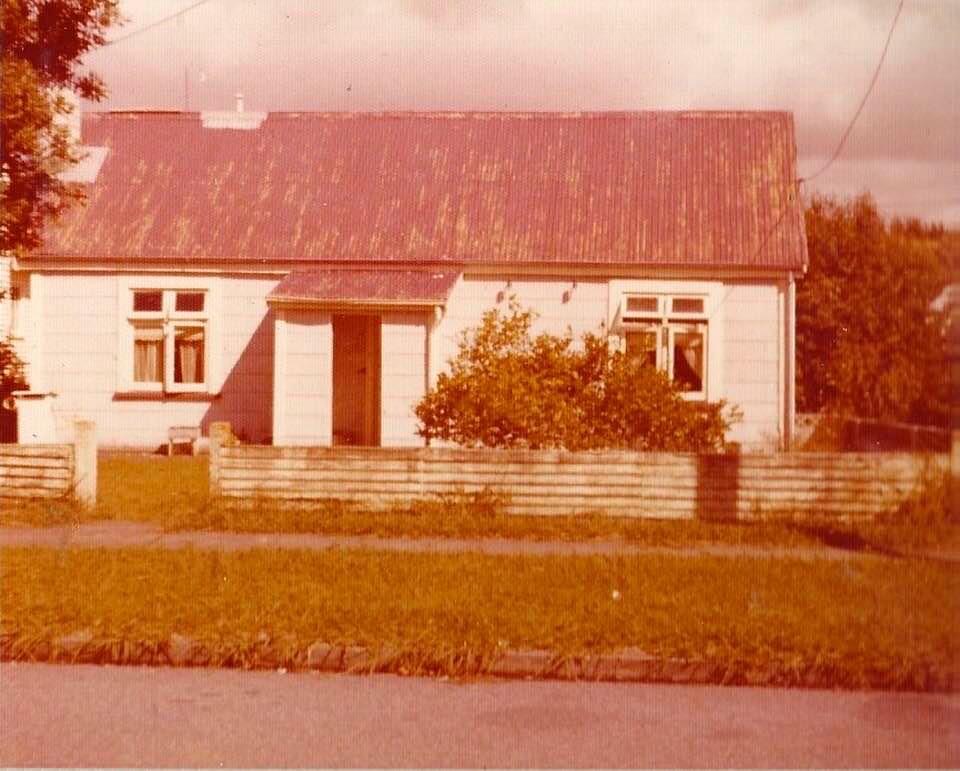
According to the 1892 electoral roll, Richard was a stablekeeper owning freehold land at Fitzroy, New Plymouth. However, Richard also owned a property at 49 Whiteley Street that is still standing.

Former home of Richard Barrett Honeyfield, 49 Whiteley Street, New Plymouth

Richard and Flo had five children:

Gertrude Blanch

  • Born 1870
  • Married William Duffin in 1907
  • Nine children
  • Died in 1968.

Laurence Hugh

  • Born 1881
  • Married Rebecca Whiteside
  • Died in 1953.

Ethel Mary

  • Born 1883
  • Married Archibald Hodge
  • Seven children
  • Died in 1974.

Jessie Eliza

  • Born 1885
  • Married Edward Thomas (Tom) Petty in 1906
  • Jessie was educated in New Plymouth and became a milliner. She was was a keen croquet player and was President of the Kawaroa Club. She was said to have great enthusiasm and great organising ability. She also helped out at the West End Bowling Club. Sadly she suffered a long illness and passed away at the age of 1929, just short of her 44th birthday. Her husband Tom was a top Taranaki bowls player and was a member of the West End Bowling Club for 50 years, eventually becoming a life member. He served at various times on the Ngamotu Beach, Kawaroa Park, Centennial Park and Paritutu Reserve committees.

Gladys Sarah

  • Born 1892
  • Married Gordon Mexted
  • Four children
  • Died in 1942.
Rebecca (Whiteside) Honeyfield and her husband Lawrence (Laurie) Hugh Honeyfield and Ellen Caroline (Honeyfield) McLean
Jessie Eliza (Honeyfield) Petty
Ethel Mary (Honeyfield) Hodge
Galdys Sarah (Honeyfield) Mexted

Family Histroy of North Dorset Honeyfields from 1680

Edited 22 June 2024

The following includes extracts from Francis Toogood’s research and The Honeyfields of Taranaki.

The Honeyfields were North Dorset tenant farmers who spoke in the Dorset dialect. Prior to the 19th century they did not read or write so the name was written as it was spoken – F was pronounced V. There are many variations of the spelling in the early records: Honeville, Honnevil, Hunneval, Honeywel, Honevil and Hunnifield are some examples. By the time the family settled at Gillingham the spelling of Honeyfield was used (1800 until the present day).

Research goes back to Kington Magna in 1704 when Robert Honeywell married Jane Parsons. Kington Magna is a small village four miles from Gillingham overlooking the Blackmore Vale. At least three to four generations of Honeyfields lived in the village and were baptised, married and buried there.

Robert was born about 1680 in the reign of Charles II. We don’t know where he was born. He lived through the reigns of James II, William and Mary, Queen Anne, George I and George II, and he died at Kington Magna in 1766 in the reign of George III.

Robert and Jane had three children. The eldest, Jane, appears to have been a cripple as the Church Warden’s Accounts refer to her being in distress repeatedly from 1741 to her death in 1767 at the age of 62, when the Parish paid for her coffin, digging her grave and tolling the bell, apparently at a cost of 10s 6d. The second child Robert, born 1706, married Anne Beaton in 1735 at St. Peter’s Church in Shaftesbury. Anne was born in 1714. They produced eight children, all recorded at Kington Magna.

The church of All Saints is in a beautiful position on the escarpment overlooking the Blackmore Vale.

Below the church is a large medieval fish pond and in the churchyard an ancient yew tree. There are no Honeyfield gravestones. In the village there are farmhouses and cottages of the 17th and 18th century. We do not know where they lived. The church records reveal Honeyfields from 1704 to 1793. The Enclosure Act around 1780 was most likely to have been the reason for the family leaving Kington Magna to settle in the Gillingham area.

James, born in 1761, married Mary White at Sturminster Newton, on 1st February 1790. They went on to live at Huntingford, a hamlet near Gillingham. James and Mary brought up their eight children at Huntingford, a hamlet with a few farms and cottages.  It would have been a long walk to Gillingham yet all the children were baptised at St. Mary’s Church. They did not go to school.

One of their sons, James, married Charlotte Coombes and stayed in Gillingham farming 150 acres and employed three men in 1851. Their daughter, Miriam, married John Goddard and emigrated to Clinton, Iowa, USA in 1880, followed by another grandson of James who was born at Cole Street Farm, Gillingham.  

The gravestone of James is one of the few around St Mary’s Church and inscribed on it are the names of some of his children. It reads: ‘In memory of James Honeyfield who died 26th March 1836 and of Mary his wife who died July 21st 1835 aged 66; also of Ann their daughter who died January 1807 aged 10 years; also of Jane Langley the daughter of James Honeyfield who died May 15th 1881 aged 82 years. Also of William Honeyfield her son who died September15th 1880 aged 74 years. Also Jane wife of the above who died June 8th 1892 aged 75 years.’

Some members of the family were leaving Gillingham by 1825 to find work. William, a woolstapler, married Elizabeth White at Glasbury on Wye.  Others went to find work away from Dorset and agriculture in the Somerset coal mines, Bristol and South Wales.

Much of North Dorset was owned by large estates. The Morgans were close relations and they rented from the Duchy of Cornwall and the Honeyfields rented from the Duke of Westminster. These wealthy landowners were never very interested in the local people or their welfare, only in the income derived from ownership. They employed unscrupulous agents who controlled the tenants. In 1847 The Wilts and Dorset Banking Company closed their office in Gillingham following acute agricultural depression and so at that time our ancestors began to consider emigration to find a better life where the climate was more agreeable for dairy farming with no tithes to pay and less taxes, where they could acquire land and eventually be their own masters. Many of our family (the Honeyfields) emigrated.

John and Hannah Honeyfield

Between 1849 and 1856 four sons and one daughter of John and Hannah Honeyfield left Gillingham for New Zealand to be followed by a granddaughter in 1875, a grandson in 1876 and three great grandsons in 1910. In 1875 Miriam (Honeyfield) Goddard left Gillingham for the USA followed by James Benjamin Honeyfield from Cole Street Farm in 1880. John and Ellen Honeyfield, grandchildren of John and Hannah, left Park Farm in 1910 and settled in Manitoba, Canada.

They all hoped for a better life and were prepared to work hard. They never returned to their homeland and made a new life in New Zealand and North America.

John and Hannah Honeyfield were also tenant farmers just out of Gillingham, Dorset. John was born in Gillingham in 1795. John was the son of James and Mary Honeyfield and great-grandson to Robert Honeywell and Jane Parsons.

Hannah Morgan was also born in 1803 at Gutchpool farm near Matcomb, part of the Duchy of Cornwall estate.

John and Hannah married in 1821 at St Mary’s Church, Gillingham. Hannah signed her name in the parish marriage records, but John did not read or write and signed his name with an “X”.

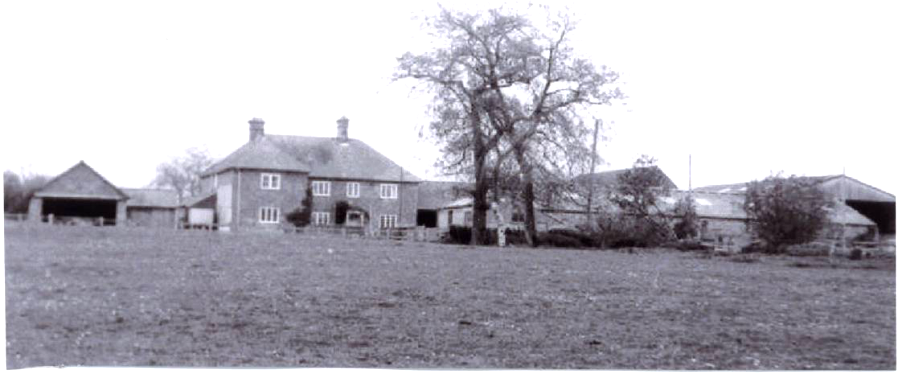
Gutchpool Farm House

As tenant farmers, John and Hannah moved farms on several occasions. John and Hannah’s eldest child, Harriet, was born at Malt House Farm in 1824. Henry John Honeyfield was born in 1830 at Longmoor Farm, near Gillingham. James and Edmond were born at Park Farm. Longmoor Farm is now part of the Duchy of Cornwall and is tenanted by Colin and Stuart Rogers.

Hannah kept a notebook and recorded the place of birth and dates of all her twelve children, eleven of whom survived to maturity. All of their children were educated, even though education was not compulsory until

John and Hannah proved to be successful farmers. The census return of 1851 states that John was employing 12 labourers.

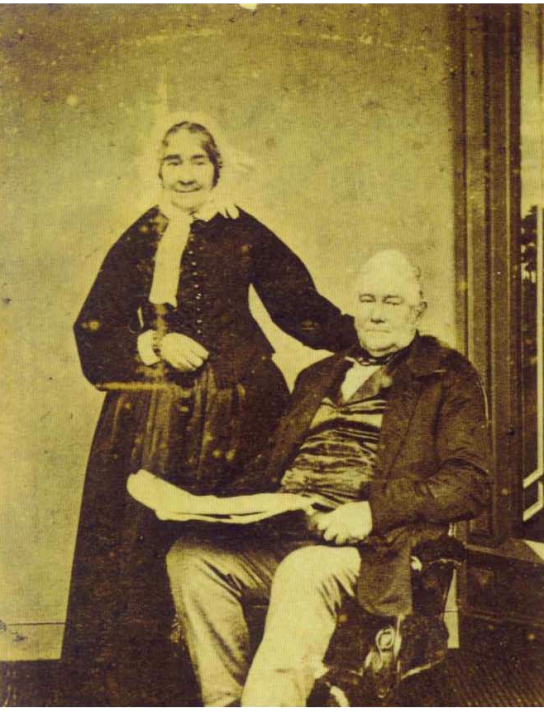
John and Hannah Honeyfield
Park farm
Park farm, Gillingham

The Census Return of 1851 states that John Honeyfield, farmer of  Park Farm (300 acres), was employing 12 labourers. 

Emma Elizabeth was the 7th child of John and Hannah, born on the 20th March 1835 at Park Farm. Hannah wrote in her note book that Emma Elizabeth died on 19th April 1839 aged 4 years.

Hannah died in 1865. The next year John married Sarah Miles, a widow and 24 years younger. By this time five of the family were settled in New Zealand; Robert and John had farms of their own and only Charles and George were at home and they did not marry for another ten years.

John and Sarah retired to Peasemarsh. John made his will in 1872 and he died the same year leaving his house and some land in trust for his children. Sarah lived another 32 years so that his estate was not settled until 1904. By this time only John, James and George were living.

There is a grave stone to John and Hannah in the old churchyard, now a garden, in Cemetery Road, Gillingham.

Francis Toogood

History of Gillingham

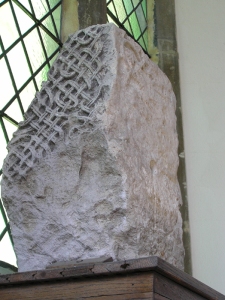
While there is evidence of early Roman settlement, the town of Gillingham, situated in North Dorset, was established by the Saxons. A Saxon Cross shaft in the church of St Mary of the Virgin dates from the 9th century.

OLYMPUS DIGITAL CAMERA
Saxon Cross shaft

According to a British History Online article, Gillingham parish lies within the area of the mediaeval Royal Forest of Gillingham. In the 12th century there was a royal hunting lodge there. More historical information about Gillingham is provided in the article, including that Gillingham was mentioned in the Doomsday Book (a census completed in 1086 ordered by King William the Conqueror), and that the Parish Church of St Mary’s dates back to the 14th century.

Today it is a small bustling industrial town on the edge of the Blackmore Vale in North Dorset at the confluence of three rivers over which pass five town bridges.

Gillingham has been a site of human habitation from earliest times. There is evidence of Roman Settlement. Later in the 12th century there was a royal hunting lodge which by 1300 had become redundant. Medieval period records mention 130 dwellings and a population of several hundred. In the 17th century the enclosure of Gillingham Forest began. The land was cleared and divided into large fields and isolated farm houses were built. A fire swept through the town in 1694 which explains why so few early buildings survive.

Gillingham possessed an early grammer school founded in the reign of Henry VIII and continuing until 1906 when it became a mixed grammer school for boys and girls.

Since Norman times there was a grist mill at Gillingham, which would have been used by the local farmers to grind corn, wheat and barely. The mill kept going until 1963. Industry first came to the town around 1769 with the establishment of silk spinning. The 1841 census records three Honeyfields as “silk threaders”. The rivers provided power for the mills that came in the 18th century.

All through the ages the largest employer has been the land and until recent times the work was done by hand. The workers had a very hard life and were poorly paid, life expectancy was not good as food was not plentiful, medicine was hard to come by and smallpox outbreaks were frequent. In 1710 there were 19 deaths. In 1740 there was another outbreak and again in 1769 there was a severe outbreak. Scarlet Fever often occurred and was a killer. In 1830 farm workers became very dissatisfied as many had no work and were on ‘poor relief’ and riots followed. 1840 was the time of the Irish Famine and many thousands emigrated, some to New Zealand. In 1843 there were 41 deaths. In 1848 the church overseers gave £40 followed by £150 for poor people to emigrate. In 1859 Robert and Rhoda Honeyfield buried four little sons aged 4, 3, 2, and an infant.

From1783 to well into the 20th century there were many Honeyfields in Gillingham: 40 in the 1841 census and 31 in 1901, but now there are none. All that is left to remind us is an estate of houses in Peasemarsh named Honeyfields.

In the summer of 1820 Constable stayed with his friend, John Fisher, in the close at Salisbury. They visited Gillingham during their stay. John Fisher was also the vicar of Gillingham. It has been established that Constable was at Ecliffe on Saturday 29th July, and made a drawing in Common Mead Lane on Sunday 30th July and next day he sketched a farm cart. By 1823 Archdeacon Fisher and family had taken up residence in Gillingham and Constable was encouraged to visit. In August 1823 he travelled to Salisbury, thence to Gillingham. He completed two works during his stay including Parhams Mill. The view is not so recognisable today as the mill burned down in 1825 but the surrounding countryside accurately portrayed.

Constable painting of Parhams Mill at Gillingham

Of the place Constable wrote:

This is a malancholy place but it is beautiful, full of little bridges, rivulets, mills and cottages, the most beautiful trees and verdure I ever saw.

The rains have swollen the rivers and swamped all our Dorsetshire meadows. The uncut hay is muddled, the cows and sheep are tainted with the coath and every paddock is spoit with “cows heels”. This is the third consecutive year it has happened and in consequence all my Gillingham farmers are ruined (and) seven of them are breaking stones on the road.

Te Puke Mahurangi and Kuramai-i-tera

Updated 28 January 2024

Te Puke Mahurangi and Kuramai-i-tera were Wakaiwa Rāwinia’s parents. Te Puke and Kuramai had two other daughters, Hera Waikauri and Herata Waikauri. Herata had a son, Hoera Pare Pare.

Hera married Ihaia Taiwhanga but had no issue of her own. Hera and Ihaia were given a Crown Grant of 8 acres of land ‘Moturoa F’ in 1887. Interestingly, a Maori Land Court order dated 17.7.1914 ruled, with the support of the Honeyfield’s, that the interests of Hera Waikauri in Moturoa F should go to her grandchildren Te Kauri Paraone and Kararaina Paraone (Hodgson, 2018).

Hera Waikauri and Hoera Parepare are listed as Ngāti Rāhiri tipuna (Ngāti Rāhiri Hāpu Constitution, Schedule 1).

Some time following the siege of Otaka Pā Herata Waikauri was taken by the Waikato as a slave. Following her release she did not marry and she died in Auckland in 1887.

Hoera married Mere but had no issue, but they adopted Eruera Kipa (Skipper), son of Hoera’s cousin, Neha Te Manihera. Hoera and Mere lived at the Kainga at Rātāpihipihi. Hoera died in 1876 and left his interest in Rātāpihipihi land to his wife and his sister, Hera (ibid). There is no evidence of Hoera and Mere having a close relationship with Rāwinia’s family (i.e. the Honeyfield’s).

Little is known about Te Puke’s background. We do not know of his parents or when or where he was born although what information is available is that he is of Te Atiawa of either Ngāto Rāhiri and/or Ngati Te Whiti.

Some researchers have referred to him as a leading Ngāti Te Whiti rangatira. Evidence that he belonged to Ngāti Te Whiti is also in the results of a census organised by Donald McLean in 1847.

Te Puke was identified as one of the Ātiawa rangatira who gave some support to the Tainui/Ngāpuhi amiowhenua taua in 1819-20 when they were under siege at the Pukerangiora Pā (Smith, 2010 p362-363). That may indicate that Te Puke shared some kinship ties to the northern tribes as did Kuramai-i-tera.

Kuramai-i-tera’s whakapapa in contrast is well-established and very impressive. Through her father, Tautara, Kuramai’s whakapapa traces back to seven of the great waka that arrived in Aotearoa around 1350 (see Wakaiwa Rāwinia’s whakapapa in the family tree links page), and to several other iwi to the north and east of Taranaki. Tautara was a leading Atiawa chief (Ariki) and was known to belong to the Puketapu and Ngāti Rahiri hapū. He also lived for a time at the Rewarewa pā of the Ngāti Tawhirikura hapū.

Te Puke and Kuramai appear to have had close relationship to the area now known as Rotokere/Barrett’s Domain, probably at the nearby Rātāpihipihi Kainga or Manahi Kainga. They allocated use of land in that area to Dicky Barrett for following his marriage to Rāwinia in 1828 (later known as Barrett’s Reserve C & D). Members of the Ngāmotu hapū were recorded as living at Rātāpihipihi at the 1878 census of the Māori population.

Te Puke and Kuramai were part of the 300 or so who choose to remain at Ngāmotu to maintain ahi kā as opposed joining the Atiawa migration south in 1832 after the seige of Otaka Pā. Their lives from then until the return of Barrett and his family eight years later can only be described as being utter misery from subsequent raids by the Tainui. Their bravery and perseverance deserve to be remembered.

Kuramai-i-tera was also taken as a slave by the Tainui in a follow-up attack in 1833 and was not released to return to Ngāmotu until late 1839, joining her husband again at the time the Barrett’s were once more resident at Ngāmotu. Kuramai was probably in the party of former Ati Awa slaves returning from the Waikato in the company of Edward Meurant, agent of the Wellesley Missionary Society (WMS), on his way from Kawhia to purchase land for the WMS (Mullon, p11).

Conditions for those who had remained in and around Ngāmotu were very harsh. Ernst Diefenbach estimated only about 20 people remaining near Ngāmotu in November 1839, and that they ‘… lived a very agitated life, often harassed by the Waikato, and seeking refuge on one of the rocky Sugar Loaf Islands, at times dispersed in the impenetrable forest at the base of Mt Egmont, sometimes making a temporary truce with their oppressors, but always regarded as an enslaved and powerless tribe’ (B Wells, Chapter 12).

One can imagine emotions being high at the sight of Dicky Barrett, Rāwinia and family at the time of their return to Ngāmotu. Dieffenbach observed that, ‘On our arrival being known, they assembled around Mr Barrett, and with tears welcomed their old friend. In a singing strain they lamented their misfortunes and the continual inroads of the Waikato. The scene was truely affecting, and the more so when we recalled that this small remnant had sacrificed everything to the love of their native place’.

Given his brave perseverance in maintaining ahi kā at Ngāmotu it is hardly surprising that Te Puke was initially opposed to selling land to the NZ Company (Caughey, 1998:134). As noted in the posting covering Barrett’s role on land sales, it was not until Barrett threatened to leave Ngāmotu once again with his family that Te Puke was coerced into signing the deed of sale.

However, prior to doing so, maybe in part in response to the perceived threat from Europeans wanting to purchase land; in part due to his conversion to Christianity following the arrival of missionaries to Ngāmotu and that Kuramai had already converted while being held as a slave by the Waikato, Te Puke and another Ngāmotu hapū rangatira, Poharama, jointly signed a deed of sale of 100 acres of land to the WMS on 13 January, 1840. That was several weeks prior to Barrett transacting the ‘Ngā Motu’ sale to the New Zealand Company that included most of the Te Ātiawa rohe.

Ngamotu Deed of Sale to Wesleyan Missionary Society, January 1840

The first mission house stood at the foot of what is now Bayly Rd and what is now the Wahitapu Urupa. In time the urupa was administered by a Board of Trustees appointed by the Minister of Maori Affairs.Some of the land sold to the WMS came under Railways ownership. Later, as a result of William J Honeyfield’s efforts, a Wahitapu Trust was formed including representatives of the Love and Barrett families (Mullon, p24).

As was common practice for Māori in becoming christian, Te Puke took the European first name of Edward, or Eruera in Te Reo: hence he signed the WMS deed of sale as ‘Edward Puke’. Te Puke may have chosen ‘Edward’ in honour of Edward Meurant.

Eruera and Kuramai saw out their years living near the Hongihongi stream, close to the Barrett family at Ngāmotu. They had seen so much change following the arrival of Europeans, the consequences from the musket wars and from early colonisation. They had no doubt witnessed much joy and happiness as well as indescribable horror and hardship in their lives. For me, their great-great-great grandson, their courage, honour and dignity remain as an inspiration.

We do not know when Kuramai died. Eruera appears to have outlived Kuramai, Barrett and Rāwinia given that Poharama Te Whiti noted in his letter to Donald McLean dated 16th February 1851 that: “our elder, Eruera, who has died, and will not return as friend or guide for me and our good friend, Hone”. Both Eruera and Kuramai are likely to be buried at the Wāitapu urupa, Ngāmotu, close to the Barretts.

Te Whānau o Wakaiwa Rāwinia Barrett: Ngā Tūpuna

Updated 23 March 2025

Whakapapa

In traditional Māori society whakapapa describe the relationship between humans and their tātai (families) inclusive of kōrero (stories) about their inter-relations and relationships with the rest of nature (Te Ao Mārama – the natural world, Te Ahukaramu Charles Royal, Te Ara). I will endeavour to capture some of that in this posting. In its broadest sense, whakapapa is about relationships and knowledge.

Hilary and John Mitchell drew on whakapapa research of their own and others to include Rāwinia Barrett’s whakapapa in their publication: Te Tau Ihu o Te Waka: A History of Maori of Nelson and Marlborough, Volume 4: Nga Whanau Rangatira o Ngati Tama me Te Atiawa: The Chiefly Families of Ngati Tama and Te Atiawa (2014). While Rāwinia and Dicky Barrett only lived at Te Awaiti in the Tory Channel for about five or six years, and moved on to Wellington and then New Plymouth, the Mitchell’s stated that:

… her inclusion in this book is justified by the roles she played as rangatira wahine whaimana [female chief of highest seniority and standing]- respected by both Maori and European – in establishing and consolidating Te Atiawa in the Marlborough Sounds.

Mitchell, 2014, p347

In the whakapapa the Mitchell’s prepared for Rāwinia’s second cousin, Huriwhenua, we can see that Rāwinia’s whakapapa traces back to the earliest origins of Te Atiawa to the birth of Awanuiarangi (from the union of Rongoueroa and Tamarau-Te-Heketanga-A-Rangi – see more information about that union here: Te Atiawa ) and to the Kāhui people and the beginning of the world with Ranginui (Rangi, sky father) and Papatūānuku (Papa, earth mother) (‘Tautara’s book’, Waitara Districts History & Family’s Research Group, and Table 9.1, page 171 in Mitchell, 2014 – a photo of which is on the Family Trees/Whakapapa page). The name ‘Kāhui Ao’ implies a tribe descended from Rangi and Papa. Tamarau’s celestial whakapapa shows his decent from Ranginui and Papatūānuku down to Ao Tatai (Marsh 2010: 31).

According to Te Rangi Hiroa (Sir Peter Buck) the first Māori to arrive at Ngā Motu, long years before the so called great fleet, were three waka called Kahutara, Taikoria, Otoki and their commanders were Maruiwi, Ruatamore and Taikoria. Descendants from this early migration subsequently were called Tini O Taitawaro. They occupied the Taranaki coast from Ōakura to Mokau. One of their villages was Otaka, the pā at Ngā Motu that was the site of the battle between Te Ātiawa and the Waikato in 1832 (Mullon, page 1).

Another inter-relationship between Te Ātiawa is the connection to the Ngāti Awa. Originally from the far north of Aotearoa, Ngāti Awa migrated to the East Coast (Whakatane) and to northern Taranaki. Once in Taranaki they intermarried with the descendants of the Tokomaru waka, establishing them as part of tangata whenua of Taranaki and even more so through the marriage of Parenui-o-Te-Rangi to Maramata-Hae-Hoe of Te Kahui Tu (Marsh 2010: 32) around 1375. Ultimately the iwi adopted the name Te Ātiawa, possibly to differentiate themselves from their origins with Ngāti Awa.

One of Rāwinia’s Tūpuna was Korotiwha, an ariki of Te Atiawa who resided at the Kairoa pā (inland from Lepperton) and was of the Ngāti Taweke hapū (Percy Smith, 1910). Kairoa pā is an historic site for Māori and an entry point for the Waikaahurangi track to Ketemarae pā, that linked northern Taranaki to southern Taranaki for hundreds of years in pre-European times. Korotiwha led Te Ātiawa in the eventual defeat of the Nga-Potiki-taua of the Taranaki iwi some 20 years after Nga-Potiki-taua’s conquest of Te Ātiawa. According to Percy Smith the small remnants of Te Ātiawa who survived the earlier Nga-Potiki-taua conquest were scattered in small groups in the bush where they hid to evade capture (page 218). It took Te Ātiawa 20 years to build up their numbers in order launch their reconquest. Korotiwha led the battle that took place at Omaru pā situated at the bend in the Waiongana river. The triumphant Ātiawa chased and killed the retreating Nga-Potiki-taua all the way to Waiwhakaiho, completing the first stage in the reconquest of Nga-Motu. It was said that so few of the Nga-Potiki-taua survived that the once powerful hapū ceased to exist (page 225). Percy Smith estimated the reconquest took place around 1760, but the whakapapa shows that Korotiwha lived 10 generations before Wakaiwa Rawinia’s grandfather, Tautara, so he would have been born around 1600. That would place the timing of the battle at around 1660, not 1760. That timing is more consistent with the population regrowth of Te Atiawa that had occurred by the 1820s.

Waka

More of Rāwinia’s whakapapa is shown in Table 19:1 (Mitchell, 2014: page 333) tracing back hundreds of years and 29 generations to the seven great waka from Hawaiki, the legendary Pacific homeland of the Māori people thought to be Rarotonga and the Tahitian region. The great waka were:

  • Aotea
  • Kahuitara
  • Tainui
  • Takitimu
  • Horouta
  • Kurahaupo
  • Matahoura

A copy of Table 19:1 can be downloaded from the Family Tree links page of this website.

To that list we can add the Tokomaru, the waka that Te Ātiawa and Ngāti Tama claim as theirs through earlier kinship connections in Taranaki. On one account Tokumaru beached at Mohakatino, just south of Mokau. The anchor stone of the Tokomaru is now held at Puke Ariki museum.

Turi captained the Aotea waka, with the journey starting from Rai’atea, Tahiti. Likely driven to seek new lands due to the growth of the population within Tahiti and the consequential demands on resources, Turi and his people set sail for Aotearoa. They landed at Aotea Harbour on the west coast of the North Island and then travelled overland to Patea, South Taranaki where they settled (Smith, 1910).

Hoturoa captained the Tainui waka, whose final resting place was in Kawhia Harbour in about 1350. The Tainui people went on to form two divisions, the Waikato to the north, and Ngati Maniapoto to the south.

The captain of the Matahoura is said to be the legendary figure of Kupe who features prominently in the mythology and oral history of some iwi. Claims about the timing of Kupe’s arrival from Hawaiki differ between tribal regions, but according to the Taranaki accounts he is regarded as a contemporary of Turi, the captain of the Aotea waka. Kupe’s wife, Kuramārõtini is said to have devised the name Aotearoa after having seen the North Island for the first time. According to Te Atiawa source, Kupe travelled down the west coast from the Auckland region, then on to the Cook Straight region.

Iwi

As noted in the posting about Dicky and Rāwinia Barrett, Wakaiwa Rāwinia was a high born woman of Te Ātiawa with whakapapa links to several other iwi including Tainui (Ngāti Maniapoto/Waikato), Ngāti Ruakawa (South Waikato), Kahungauru (Hawkes Bay), Ngāti Ruanui (Taranaki), Ngāti Tama (North Taranaki), Ngāti Toa (Kawhia) as well as Ngātiawa on the west and east coasts of the North Island.

Maniapoto/Tainui

Rāwinia’s mother, Kuramai-i-tera, was a daughter of Tautara, an ariki of Te Atiawa. Tautara’s whakapapa traces back to the Tainui waka, and through to Maniapoto, eponymous founder of Ngāti Maniapoto.

Rāwinia’s whakapapa also connects to the first Māori king Potatau (Te Wherowhero) who was descended from Uruhina, grandson of Te Kaha-iri-rangi (ibid). More distantly in the same Tainui line, Rakamaomao’s son Tuihaua was the great-grandfather of Toa Rangatira, the eponymous ancestor of Ngāti Toa (ibid).

Maniapoto lived in the 17th century and established numerous powerful tribes. Maniapoto’s great-grandparents, Tūrongo and Māhinarangi brought together both the Tainui and East Coast tribes, something that is still celebrated today. Tūrongo and Māhinarangi’s son Raukawa was the ancestor of the Ngati Raukawa (Te Ara, Encyclopedia of NZ and here). Raukawa is an ancestor of the Māori King. There is a carved meeting house named after Māhinrangi at Turangawaewae.

The marriage of Maniapoto’s great-grandparents, Ruaputakanga (Ngāti Ruanui, South Taranaki) to Whatihua (Tainui) brought together the ariki ancestral lines of the Tainui and Aotea waka (NZETC).

Ruaputahanga named the Whaikaahurangi track. Returning to Patea from Kawhia about 1560, Rauputakanga rested at a spot she termed Whaikaahurangi (Whaikaahu – to turn upwards; rangi – the heavens).

Maniapoto’s son, Te Kawa-iri-rangi (Te Kawa), visited the chief of Tamaki Makau Rau (Auckland) at Maungakeikei (One Tree Hill) and married his two daughters. By one, Maroa, he had a son, Tukemata. Te Kawa went on to Taranaki where he killed a Taranaki man, and was consequently killed by the Ngāti Tama. Tukemata went on to avenge his father’s death and defeated Ngāti-Tama at Taranaki. This in turn led to Ngāti Tama defeating Tukemata at Maungakeikei, killing Tukemata. Joining forces with the Waikato, Tamaki avenged his death by defeating Ngāti Tama. Out if that victory came the saying, ‘Mokau ki raro, Tamaki ki runga’ (from Mokau to the south, to Tamaki in the north) signifying they were a united people (A “Tainui” Whakapapa).

Ngāti Tama

Ngāti Tama’s whakapapa goes back to Tama Ariki, the chief navigator of the Tokomaru waka.

Tukemata’s daughter, Puraekorau, in an initiative probably designed to set aside the family feud with Ngāti Tama, married a Ngāti Tama man, Kauparera. Unfortunately the period of goodwill was short lived. In the course of a visit, Puraekorau’s uncle Runga-Te-Rangi was killed by Ngāti Tama. His body drifted away in the tide and was subsequently found by Tainui people at Hakerekere beach. It was from that unfortunate death that Puraekorau prophesied that her northern relatives would avenge the death and ‘tread the sands of Hakerekere’ (ibid) … a prophecy that came true in the 19th century.

Te Atiawa

Rawinia’s whakapapa links from Maniapoto/Tainui, to Ngāti Tama and then to Te Ātiawa seems to have occurred with the marriage of Tamakura and Ko Hine Te Wiri-Noa (Ātiawa). Their son, Rehia, married Wha-Kie-Kie. They were the great-great grandparents of Tautara on his mother’s side. Interestingly, Rehia had a second wife, Korekia Kino and their son was Potaka Taniwha, Tautara’s grandfather through his father, Te Puhi Manawa (Mitchell, 2014, page 171, Table 9.1).

Potaka Taniwha

Potaka Taniwha was Rāwinia’s great–great-grandfather and his wife, Arataki was her great-great-grandmother.

Potaka is said to have belonged to the Puketapu hapū and he resided at the Nga-puke-turua pā – near Sentry Hill to the north of New Plymouth (Smith, p180). Around 1770 Potaka (who would have been elderly by then) was said to have successfully gone to the rescue of his kin of the Ngāti Tuparikino hapū who were being attacked by Rangi-apiti-rua (who was related to the Taranaki iwi and Te Ātiawa, and who at that time resided at Puke-ariki) seeking utu over recent strife between the two sub-tribes.

Te Rangi-apiti-rua was apparently related to Potaka as well (possibly through Potaka’s Ngāti Ruanui ancestry), and the two went on to successfully launch an attack on the Nga-potiki-taua hapū (Taranaki iwi) who at that time occupied the land around Ngā Motu.

Although well advanced in years at the time, Potaka was also well known for the way he went about getting his second wife, Uru-kinati. Daughter of Kau-taia, chief of the Pari-hamore pā of the Ngāti Tuparikino hapū, Uru-kinati was well known for her beauty. Potaka was said to be living at Para-iti at the time, just inland from Bell Block (Para-iti was one of the reserves set aside for Māori as part of the Bell Block land purchased by the Crown (Aroha Harris, 1991)). Although gauged to be an unlikely suitor for Uru-kinati due to his age, Potaka was adamant that he would posses her. With that aim he staged a siege of Pari-hamore and succeeded in having Uru-kinati turned over to him (Smith, page 187). Rāwinia was related to the Te Keha whānau through Potaka’s second wife, Urukinaki of Ngāti Tuparekino (ibid, page 430, Table 26.1).

Tautara

Rāwinia’s grandfather, Tautara, lived at the Puketapu pā, but also resided at other times at the Rewarewa pā of Ngāti Tawhirikura. One of Tautara’s sons was Te Wairauheke Epiha Karoro who resided at Mokau and subsequently Wellington. According to this National Library article Tautara was was of Ngatī Rāhiri. Huriwhenua, a great-nephew of Tautara, was the paramount chief of Ngāti Rāhiri ki Te Tau Ihu (top of the South Island). (Mitchell, 2014:170).

Tautara was a warrior who had a reputation of being magnanimous in victory. Tautara participated in what became known as the Battle of Motunui in 1822 when Ngāti Toa (from Kawhia) joined forces with Te Ātiawa and defeated the Tainui invaders. Matiu Baker noted that :

Tautara was closely related to many of the leading Waikato chiefs, and out of aroha (sympathy) advocated on their behalf to ensure their safe retreat from the affray. Such considerable and sympathetic conduct was considered tika [doing the right thing] and commensurate with his rank and station.

In Mitchell, 2014 p154. In Baker, M: Tautara. In Nga Tupuna o Te Whanganui-a-Tara Vol 3, p65; quote from Wiremu Nero Te Awataia, Rangatira of Ngati Mahanga

About ten years later in 1832, Tautara, as the ariki of Te Ātiawa who were at that time besieged by the revenge seeking Tainui under Te Wherowhero (and again in the position of being closely related to the leading ranks of the northern invaders) was able to meet the leaders on common ground. Tautara tried to induce his cousin, Te Kanawa to withdraw from Ōtaka but without success. In the final repulse of the enemy, when they were badly beaten and suffering loss, Te Kanawa called out to Tautara to stop the slaughter and spare them, but Tautara replied:

No! It is now too late for that; you should have listened to me earlier. You must take your well-deserved punishment.

S. Percy Smith. Incident related to the author by Tai-ariki of Pukerangiora, November 30, 1899. In History and traditions of the Maoris of the West Coast, North Island of New Zealand, prior to 1840.

Te Kanawa survived the Battle of Ōtara Pā and went on the sign the Treaty of Waitangi (Te Tiri) at the Waikato Heads in late March or early April 1840. Widely known as a fighting chief, Te Kanawa actually accompanied Te Wherewhero on many taua during the 1820s and 1830s. In 1857 he was one of the rangatira present when Ngāti Maniapoto confirmed their support for Te Wherowhero as the first Māori King. By all accounts Te Kanawa was quite a character, as for example:

When the geologist Ferdinand Hochstetter visited Aotea Harbour in 1859, he asked what had happened to the other tribes who had lived in the area [eg. Ngāti Toa]. The chief’s response was ‘we have eaten them all up’.

NZHistory..govt.nz

There are various references to Tautara being either of the Puketapu hapū, Ngāti Rāhiri or Ngāti Tawhirikura. In a report commissioned by the Waitangi Tribunal, Lou Chase had Tautara down as being Tawhirikura and Puketapu (Table 11, page 50). Interestingly, the same source had Te Puni and Te Wharepouri down as being Tawhirikura.

In another report for the Waitangi Tribunal, Tony Walzl had the following to say: ‘Tautara, described by W H Skinner as an ariki and principal chief of Ngatiawa [sic], was staying at the Rewarewa pā [on the north bank of the Waiwakaiho River] when the [Amiowhenua] taua arrived (in 1821-22). His usual place of residence was Puketapu Pā, a few miles to the north’. The taua went on to stay at the Ngapuketurua pā, that had been occupied by the Puketapu and was said to belong to Rauakitua and his nephews, Te Puni and Te Wharepouri.

The taua was about 600 strong and comprised warriors from a number of iwi including Ngāti-Whatua of Kaipara, Waikato, and Ngāti–Maniapoto (History and Traditions of the Taranaki Coast, Chapter XIV – continued, Journal of the Polynesian Society).

Tautara was initially opposed to the presence of the Amiowhenua taua and arranged a siege of Ngapuketurua Pā. Differences of views within Te Ātiawa eventually led to Tautara changing his mind and he went on to assist the taua to make their way back to their northern homelands.

According to a National Library record, Tautara was a chief of the Ngāti Rāhiri. Tautara had a son called Epiha Karoro (Wairauheke) who married Ruhia Pote (Te Ātiawa). They had two children, a daughter called Heni Karoro Wairauheke and a son, Epiha Karoro Wairauheke. Heni married Ihakora Te Ngarara of Waikanae. Epiha (2nd) married Katene who took her husband’s name and became known as Katene Epiha Karoro. Epiha and Katene had two children; Hone Epiha Karoro (aka Hone Ngatai, Hone Keko) and Hamuera Epiha Karoro. Hone Ngatai married Roka Te Uira of Mokau (Ngati Rakei) and had one child Kohi Katene Epiha Karoro (aka Kimihangaroa, Kimi Ngatai, Kimi Matenga) who married Matenga Winara Southey Baker (Ngati Toa, Te Ati Awa, Ngati Raukawa) of Otaki. Epiha (1st) was a known correspondent to Colenso and lived at Mokau, Taranaki, where he died about 1887.

Epiha Karoro corresponded with Donald McLean (a government official involved in land negotiations between the government and Māori) in February 1851 asking that certain lands belonging to Ngāti Rāhiri be held over from sale by the government pending an inquiry into the justice of the case.

Rāwinia’s first cousin, Tuarau (son of Rāwinia’s aunty Hineone), who was a rangatira of the Ngati Tawhirikura hapū, also signed Te Tiriti at Port Nicholson in April 1840.

Dicky and Råwinia Barrett

While Rāwinia’s husband, Dicky Barrett, was employed as an agent and interpreter by the New Zealand Company’s land sale negotiations with Māori, her family ties were also of crucial importance. The Mitchell’s stated that:

[Barrett’s] success of behalf of the Company possibly had very little to do with Barrett’s “translations’, but derived more from the genealogical ties of his wife, Wakaiwa Rāwinia, the the leading rangatira in Taranaki, Waikanae, Port Nicholson and Queen Charlotte Sound.

H & J Mitchell, 2014, p345

Indeed, it has been noted elsewhere on this website that the New Zealand Company’s decision to engage Barrett was in not small part due to Rāwinia’s family ties.

On the subject of Rāwinia’s family ties during the early period of colonial settlements, the Mitchell’s also noted that:

Through the siblings of her mother Kuramai-i-tera, Wakaiwa Rawinia was related to a number of prominent chiefs of the colonial period on both sites of Cook Strait. Her Uncle, Epiha Te Korokoro (a.k.a. Waireweke) represented Wellington hapu at the Kohimarama Conference called by Governor Thomas Gore Brown in 1860; Waireweke’s first wife was Hana Te Unuhi, sister of Merenako, senior rangatira wahine at Motueka in the Nelson district. The descendants of another uncle, Paruka, also had close ties to Motueka through Paruka’s daughter, Oriwia (i.e. Wakaiwa Rawinia’s first cousin), who married Hoani Kitakita. Their daughter, Pare (Mere) Kitakita was the wife of Huta Pamriki Paaka of Motueka. Pare and Huta were founders of the large Park dynasty.

Through her grandfather’s brother, Tuhangaira and his wife Te Haunga, Wakaiwa was second cousin of both Huriwhenua, paramount chief of Ngāti Rāhiri ki Te Tau Ihu who lived at Moioio and Kaihinu in Tory Channel, and his sister Wharemawhai who was wife of Nohorua, eldest brother of Te Rauparaha of Ngati Toa.

H & J Mitchell, 2014, p346

Huriwhenua signed the Treaty of Waitangi/Te Tiriti at Queen Charlotte Sound on 5 May 1840. He orginally lived at Te Taniwha pa at Turangi, near Waitara (NZ History).

Summary

Whakapapa outlines relationships between people and their environment, from the beginning of the world with Ranginui (Rangi, sky father) and Papatūānuku (Papa, earth mother) to the first tipuna all the way to the present and towards the future.

Rāwinia’s whakapapa then traces back to the first migrations to Ngā Motu / New Plymouth and further north to Mokau, Taranaki – (Kāhui Ao) and to the great fleet migrations of the 14th century, most notably the waka Tokumaru and Aotea. Thus, many of Rawinia’s tūpuna were regarded as rangitira whaimana – chiefs of great standing.

Rawinia’s iwi, Te Ātiawa, was forged not only from the earlier people, but from other iwi formed from the great migrations, including the Ngāti Awa who landed first in the far north of Aotearoa and subsequently migrated south to Whakatane on the East Coast, and west to northern Taranaki.

Subequent iwi connections were forged from intermarriage, including several from Tainui / Maniapota (Waikato) and marriage of Ruaputakanga (Ngāti Ruanui, South Taranaki) to Whatihua Tainui, a marriage that brought together the ariki ancestral lines of the Tainui and Aotea waka.

Several of Rāwinia’s tūpuna were historically notable Māori who led Te Atiawa in battle with neighbouring tribes, such as Korotiwha’s victory of Nga Potiki. From the Tainui /Maniapoto connection there is whakapapa to Maniapoto, the eponymous ancestor of Ngāti Maniapoto and to the first Māori king, Potatau. Ruaputakanga named the Whaikaahurangi track. Rawinia’s grandfather, Tautara, was an ariki of Te Ātiawa who was involved at various times in supporting and then fighting against his cousins from the Waikato.